
 Italiano






Product validation using Noselab ATS equipment
Each material may require a combination of mechanical, thermal and functional tests. To proceed, it is always helpful to have a complete overview of all the tests:
- Physical and mechanical tests:
Physical and mechanical tests form the starting point for the qualification of a material. By measuring strength, deformation and behaviour under load, it is possible to compare formulations, validate batches and verify compliance with technical specifications.
Noselab ATS equipment is used on standardised test specimens and/or samples taken from finished products, for research purposes or routine quality control checks.
- Abrasion and wear behaviour:
Abrasion is a key parameter for technical rubber products, components subject to friction and materials intended for continuous contact. Specialised systems provide comparative data that is useful for assessing durability and performance stability over time.
When the material is intended for dynamic applications or high-wear environments, incorporating an abrasion test into the quality control process helps to prevent problems further down the line.
- Deflection and specific thermal tests:
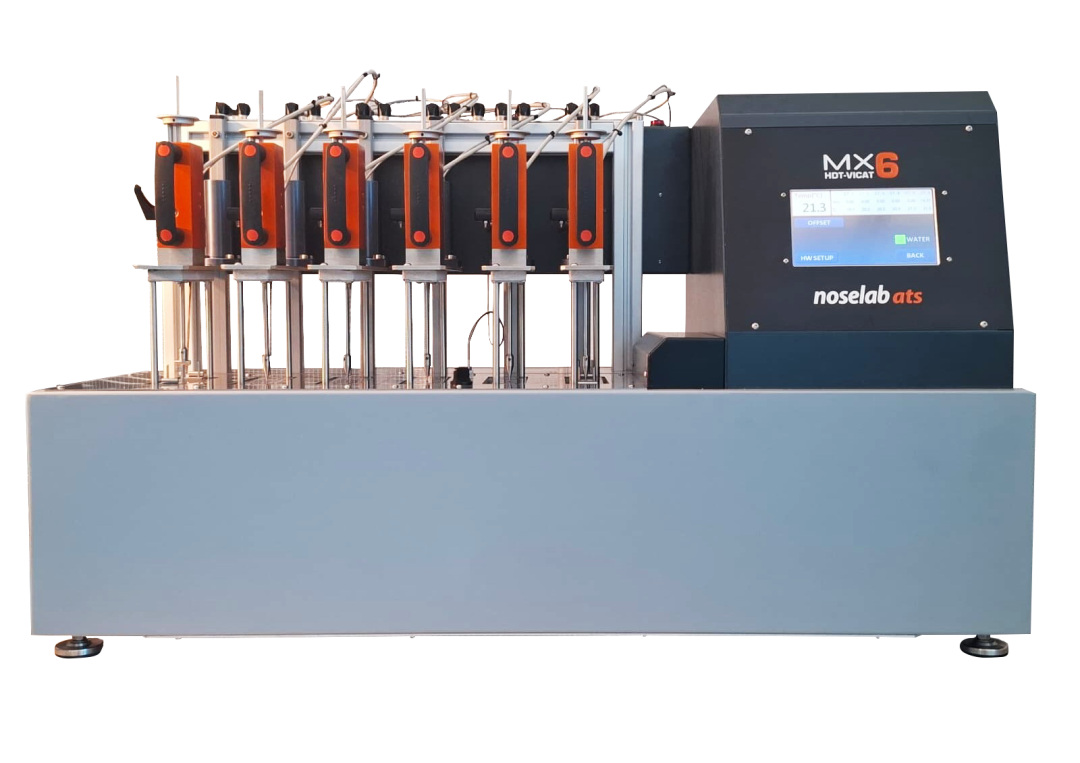
Deflection under load and specific thermal tests make it possible to analyse the material’s behaviour as a function of temperature. In many technical specifications, mechanical strength must be verified within a specified temperature range.
These tests are essential for structural components, technical parts and applications where dimensional stability and rigidity must be guaranteed even under varying temperature conditions.
- Ageing and stability over time:
Ageing tests simulate conditions of prolonged exposure to heat or light, in order to assess how properties change over time.
This step is essential for materials intended for outdoor applications or those subject to repeated thermal cycles. Combining ageing with subsequent mechanical tests helps to measure the actual loss of performance.
- Tests on plastic films:
Testing on plastic films requires specialised set-ups capable of handling thin gauges and deformation. In such cases, the choice of accessories and clamping methods is crucial to achieving truly repeatable results. Noselab ATS instrumentation analyses the mechanical behaviour and stability of films and thin sheets used in packaging, laminates and technical applications.
- Sample preparation and data quality:
Proper sample preparation is an integral part of the testing process. Geometry, surface finish and dimensional consistency directly influence the quality of the results. Dedicated preparation solutions standardise the laboratory’s workflow, thereby reducing variability and improving the repeatability of tests.
- Characterisation of raw materials:
The characterisation of raw materials is the first line of defence in preventing defects in the finished product. Assessing the processability and consistency of incoming material reduces scrap, complaints and rework. Integrating this stage with mechanical, thermal and ageing tests provides a comprehensive picture of the material’s performance throughout its entire life cycle.
In summary, testing of plastics and rubbers requires an integrated approach: mechanical, thermal and durability testing, as well as raw material control, must all work in tandem.
Browse the catalogue to find the solution best suited to your testing requirements, or contact us to request information directly from our team.


